
Two years after its splashy debut, the question is still hanging in the air: Is the Vision Pro a high-tech paperweight or the future of work? Apple's latest numbers are in, and the story they tell about the enterprise market is not what you think. Let's get into it!
The Next Vision Pro: What the Rumor Mill is Saying
Let's be real: the first Vision Pro was incredible, but it absolutely felt like a first-gen product. It was heavy, the battery life was a joke, and you were always aware you had a computer strapped to your face. So, what's next? The rumor mill is churning, and it sounds like Apple is listening to our complaints.
While Apple is playing it cool, industry analysts are pointing to a new model that isn't expected until the end of 2026 at the earliest, with some pointing to 2027. The big focus? Fixing the stuff that drove us crazy the first time around. We're talking about a lighter design, a more powerful chip, and a display that's even smoother.
- Shedding Some Weight: The number one complaint was comfort. Reports suggest Apple is working on a redesigned head strap and lighter materials to tackle the neck strain that made all-day use a fantasy.
- Powering the Next Wave of Apps: The original M2 chip was no slouch, but rumors are flying about a jump to a next-gen M5 processor. This means architects can load a full-scale building model with thousands of textures without a single stutter, something the M2 struggles with today.
- Buttery Smooth Display: The first-gen display was already gorgeous, but word on the street is the new model could get a refresh rate bump to 120Hz. That means scrolling through documents or manipulating 3D models will feel instantaneous and incredibly fluid.
The one thing that probably isn't going away is that external battery pack. We're still going to be tethered for a while, it seems. But if Apple can nail the comfort and performance, the next Vision Pro could be the enterprise machine we've been waiting for.
The Million-Unit Question: Did Anyone Actually Buy One?
The Vision Pro launch in early 2024 was pure hype, with die-hard fans snapping up an estimated 160,000 to 180,000 units in the first weekend alone. But after that initial sugar rush, things got quiet. A little *too* quiet.
By April 2024, the reality check hit. Respected analyst Ming-Chi Kuo reported that Apple had slashed its 2024 shipment forecast from an optimistic 800,000 units down to a more sober 400,000-450,000. By the end of the year, total shipments landed around 400,000-500,000 units. Then came 2025, and the bottom fell out. Reports from early 2026 suggest total shipments for all of 2025 may have been as low as 80,000 to 90,000 units. That’s not a dip, that’s a nosedive.
Let's put that in perspective: Apple sold an estimated 247 million iPhones in 2025. The Vision Pro is a drop in the bucket, proving it's still a super niche product. But for the Vision Pro Enterprise market, it's not about selling millions—it's about selling to the *right* thousands.
Enterprise Applications: Transforming Healthcare, Engineering, and Manufacturing
Forget the consumer market for a second. In the enterprise world, the Vision Pro is already a quiet conqueror, and the signs were there from the very beginning.
Way back in March 2024, just after the first model launched, Siemens Healthineers dropped its Cinematic Reality app. It let surgeons, students, and even patients view and interact with photorealistic 3D holograms of the human body created from medical scans. And two years later, that app is now a staple in teaching hospitals, allowing students to perform virtual dissections on photorealistic anatomical models.
That was the proof-of-concept. Today, this is where the Vision Pro is killing it:
- Healthcare: Surgeons are using it to overlay 3D models onto patients during operations, and the hands-free interface is a revolution in sterile environments.
- Engineering & Design: Look at the architecture firm Foster + Partners, which has been using the Vision Pro to allow clients to walk through full-scale digital models of their future buildings, catching design flaws that would have cost millions.
- Manufacturing: Technicians get remote assistance from experts thousands of miles away, who can see what they see and drop virtual arrows onto real-world equipment. It's slashing downtime and training costs.
The secret sauce is custom software. Companies are pouring money into developing bespoke apps that leverage the Vision Pro's unique spatial abilities, creating workflows that simply weren't possible before.
The XR Thunderdome: Samsung and Google's XR Headsets Challenge Apple
Apple had the high-end field to itself for a hot minute, but the competition isn't sleeping. Samsung and Google have teamed up, and they're coming for Apple's lunch money.
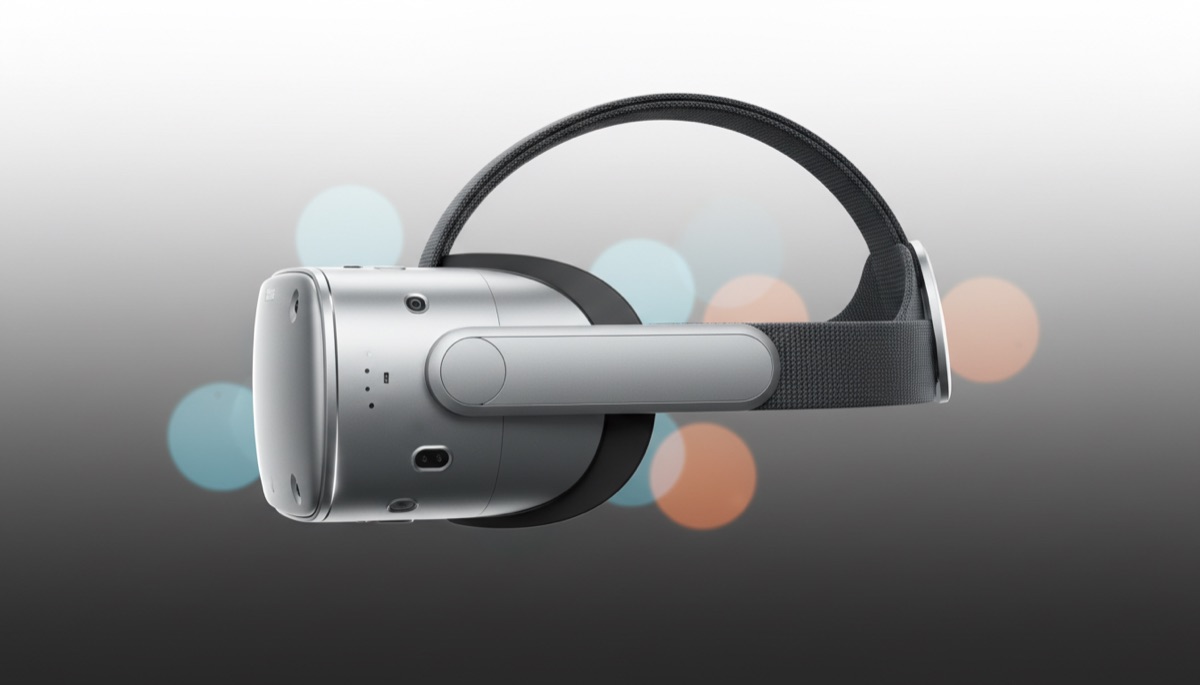
Samsung's Galaxy XR headset, powered by Google's new Android XR platform, is a serious contender. Released in October 2025 for around $1,799, it's already making waves. It matches the Vision Pro with stunning Micro-OLED displays, but it's built on an open platform that is absolute catnip for developers. That means more apps, faster.
And Google's not just providing the OS. Its Gemini AI is baked right in, promising a smarter, more context-aware assistant than what Apple currently offers. The Galaxy XR is also noticeably lighter and undercuts the Vision Pro on price, making it a tempting alternative.
This rivalry is fantastic news for us. It's pushing Apple to innovate faster, address its weaknesses, and maybe—just maybe—think about a more accessible price point down the line. The Vision Pro Enterprise has a fight on its hands.
The Verdict: Conqueror or Bust?
So, after all the hype and the reality checks, what's the final verdict on the Vision Pro? Is it a conqueror or a bust? The answer is both.
For the average consumer, the Vision Pro is a bust. It's a breathtakingly expensive, deeply niche gadget that's still searching for a problem to solve in our daily lives. The sluggish sales figures tell that story loud and clear.
But in the enterprise? It's a conqueror. For the surgeon planning a complex operation, the engineer visualizing a jet engine, or the designer collaborating on a new product in 3D, the Vision Pro isn't a toy. It's the new corner office. For businesses with deep pockets and a need to interact with spatial data, this device is already delivering a return on investment through its high-resolution displays and intuitive, hands-free interface. The future of computing is here—it's just not for everyone... yet.