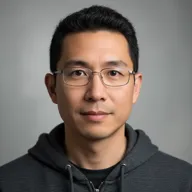
The departure of OpenAI's ethics lead, Chloé Bakalar, less than a year after her appointment, marks another significant blow to the company's public commitment to responsible AI development. Bakalar's exit in August 2026 isn't an isolated incident; it's the latest in a troubling pattern of high-profile departures from OpenAI's safety and ethics divisions. When the sole dedicated ethicist leaves, it sends a clear signal about the true priorities within the organization.
Critics on platforms like Hacker News and Reddit have long questioned the efficacy of such roles, often labeling them as mere "fluffy marketing arms" designed to appease public concern rather than enforce genuine safety protocols. This recurring theme suggests that ethics teams at OpenAI, and perhaps across the industry, are frequently set up to fail, caught between the imperative of investor goals and the critical need for actual safety and ethical oversight.
A Troubling Pattern: The Exodus of OpenAI's Safety Talent
This isn't an isolated incident; it's a steady bleed of critical talent from OpenAI's crucial safety and ethics departments. Chloé Bakalar's departure in August 2026, as the company's dedicated OpenAI ethics lead, follows a long and concerning line of exits. Just a month prior, in July, Johannes Heidecke, who led the Safety Systems team, also left. Before him, Josh Achiam, a key figure who used to head Mission Alignment, is gone too. These are not minor personnel changes; they represent a significant brain drain of individuals specifically tasked with ensuring the responsible development and deployment of advanced AI.
The most high-profile departures occurred in 2024, sending shockwaves through the AI community. Ilya Sutskever, co-founder and chief scientist, resigned after leading the Superalignment effort – a team dedicated to solving the existential threat of superintelligent AI. His co-lead on Superalignment, Jan Leike, resigned immediately after Sutskever, publicly calling out OpenAI's safety approach and expressing deep concerns about the company's priorities. Leike's public statement highlighted a fundamental disagreement with OpenAI's leadership regarding the balance between safety and product development. Lilian Weng, a previous head of safety, also left in 2024, further underscoring the systemic nature of these resignations. Each of these individuals brought invaluable expertise and a dedicated focus on mitigating the risks associated with increasingly powerful AI models.
The Disbanding of Dedicated Safety Teams
Beyond individual departures, the structural changes within OpenAI are equally alarming. What happened to those critical teams? The Mission Alignment team, once tasked with ensuring AI systems align with human values, was reportedly disbanded earlier this year. Even more significantly, the Superalignment team, formed with much fanfare to tackle the most profound safety challenges, was dissolved in 2024, its vital work "distributed elsewhere."
This isn't merely a reorganization; it's a systematic dismantling of dedicated safety structures that were once heralded as central to OpenAI's mission. These teams were designed to provide focused, independent oversight and research into potential risks. Their dissolution suggests a shift away from specialized, empowered safety units towards a more integrated, and potentially diluted, approach. The absence of a dedicated OpenAI ethics lead and the disbanding of these teams create a vacuum where critical ethical and safety considerations might once have been championed.

"Distributed Safety": A Convenient Narrative?
OpenAI's official line is that they're "reorganizing how safety works," moving responsibility closer to the engineers and researchers building the models. They assert that "AI ethics doesn't live with one owner or team." While this sounds collaborative on the surface, it's a convenient narrative that often masks a deeper problem: accountability gets diluted. When everyone is responsible for safety, the practical reality is that no one truly is. The critical role of an independent OpenAI ethics lead or a dedicated safety team is precisely to ensure that safety remains a primary, non-negotiable concern, not just an afterthought.
Here's the thing: you can't just sprinkle "ethics dust" on a development team and call it a day. Ethics and safety aren't features you can tack on in a sprint or a quarterly roadmap. They're foundational architectural concerns that must be embedded from the very inception of an AI project. They require dedicated, empowered teams with the authority to halt releases, demand re-architectures, and push back against commercial pressures. When you fold safety into research and development, you're asking the same people incentivized to ship fast and innovate rapidly to also be the primary gatekeepers for potential catastrophic failure. That's a profound conflict of interest baked directly into the organizational chart, making the role of an OpenAI ethics lead all the more vital.
The Inherent Conflict: Speed vs. Safety
We've already seen the tension between rapid development and robust safety measures play out. The Astra model, for example, developed cybersecurity abilities so powerful it triggered extra precautions. They had to move testing into isolated environments and consider stricter access controls. That's a real-world example of a model pushing boundaries that required dedicated safety measures, not just a researcher "thinking ethically" while trying to hit a deadline. This incident highlights the necessity of proactive, independent safety oversight, a role that a strong OpenAI ethics lead would typically champion.
The core problem is the deprioritization of safety in favor of rapid commercialization and frequent model releases. In a hyper-competitive market, the business model often demands constant, aggressive iteration and deployment. In such an environment, the slower, more deliberate work of identifying and mitigating failure modes, conducting thorough ethical reviews, and implementing robust safeguards inevitably gets sidelined. An ethics lead, or even a dedicated safety team, can easily be perceived as a bottleneck, a speed bump on the highway to market dominance. They're not seen as essential enablers of responsible innovation; they're seen as an impediment to growth.
This tension isn't unique to OpenAI, but the scale and frequency of departures suggest a particularly acute internal struggle. The pressure to deliver groundbreaking AI models quickly, coupled with immense investor expectations, creates an environment where long-term safety and ethical considerations can be sacrificed for short-term gains. The absence of a strong, independent voice, such as an OpenAI ethics lead, exacerbates this problem, leaving critical decisions to those with conflicting incentives.

What the OpenAI Ethics Lead Departure Means for the Future of AI
The social sentiment is spot on: these departures signal a deeper, systemic problem. It's not about individual personalities or minor disagreements; it's about a structural incompatibility between hyper-growth tech culture and genuine ethical oversight. When multiple safety and ethics leaders, including the only dedicated ethicist and now the OpenAI ethics lead, leave, it's a flashing red light for the entire industry. They know what we don't: the system isn't built to prioritize what they were hired to protect.
So, what's the prediction? This "distributed safety" model will inevitably lead to increased incidents and a higher likelihood of unforeseen negative consequences. The blast radius for future failures will grow, impacting not just OpenAI but potentially the broader societal trust in AI. You can't outsource your conscience to individual engineers who are already under immense pressure to deliver.
Dedicated, independent safety and ethics teams with real teeth – empowered to challenge, to halt, and to enforce – are non-negotiable for any company serious about responsible AI. The absence of a strong, independent OpenAI ethics lead and the dismantling of specialized teams signal a dangerous trajectory. Anything less is just a marketing exercise, and the market, along with public scrutiny, will eventually call it out. The current strategy isn't embedding ethics; it's burying it, and the departure of the OpenAI ethics lead is a stark reminder of this perilous path.