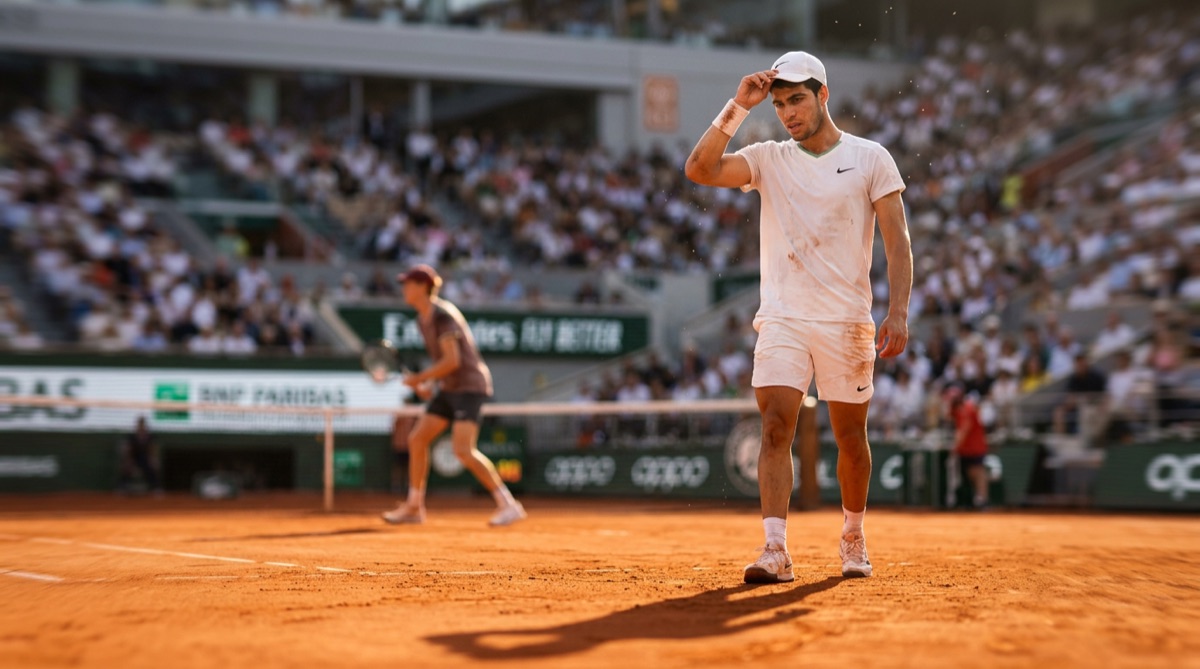
Carlos Alcaraz's victory over Jannik Sinner in the 2024 French Open semifinals wasn't just about baseline fireworks; it was a masterclass in mid-match adaptation, a tale of glorious uncertainty played out on the hallowed clay of Roland-Garros. Sinner started like a man possessed, but Alcaraz, staring down a two-sets-to-one deficit, didn't wilt. He subtly, then decisively, shifted his tactics, turning an almost certain defeat into a five-set epic.
The Gathering Storm
For a time, it seemed there was no answer to the Italian storm. In the first set, Sinner was a force of nature, his game a brutalist symphony of power and precision as he raced to a 6-2 victory. Alcaraz, pushed deep behind the baseline, looked uncharacteristically rattled, his game littered with the kind of errors one seldom sees from the Spaniard. The match was being dictated on Sinner's terms, and for a long stretch, it felt more like a coronation than a contest.
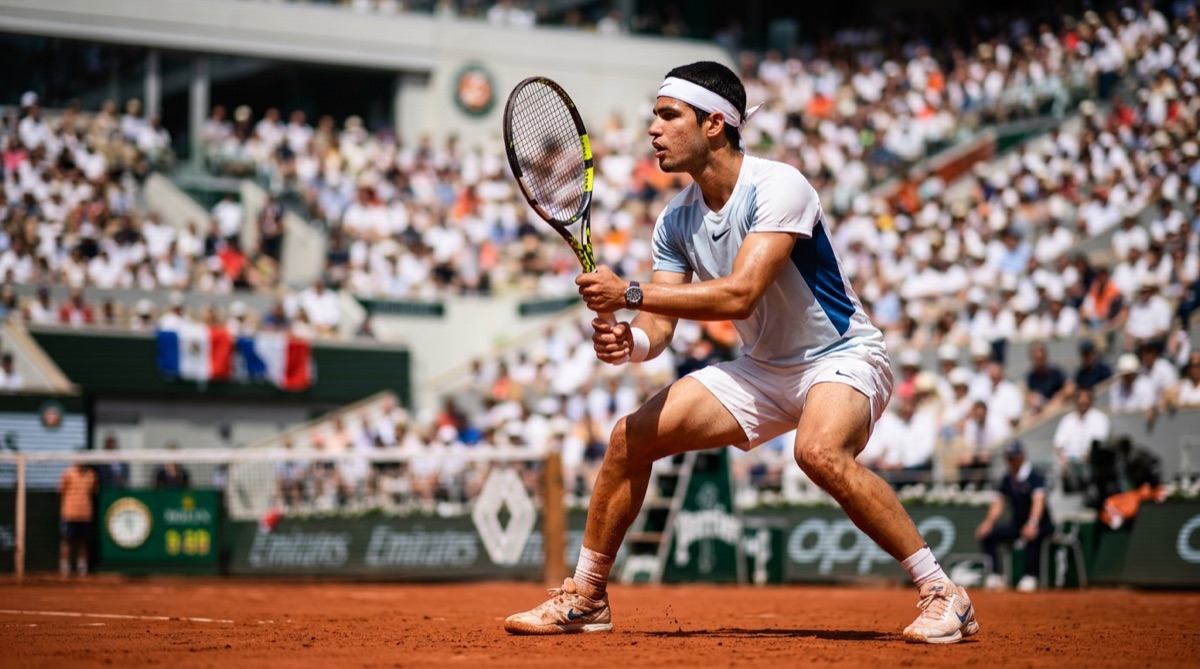
Alcaraz's return position: a strategic adjustment.
A Doosra on Clay
Then came the shift. It wasn't a sudden, violent change, but something more cunning. Like a master off-spinner in the dusty heat of Chennai, Alcaraz delivered a tactical 'doosra'—a deceptive change of pace and position that completely wrong-footed his opponent. He began to vary his return stance, robbing Sinner of his rhythm. But as the tactical battle unfolded, a physical one emerged. Both men began to suffer, with Sinner cramping in his hand and Alcaraz also fighting his own body. This was now a test of resilience as much as skill.
This gambit paid handsome dividends. By consistently forcing the issue at the net, Alcaraz disrupted Sinner's metronomic groundstrokes and introduced a seed of doubt into the Italian's mind. The match was no longer a monologue; it had become a conversation, fraught with physical tension and tactical nuance, a true battle of attrition where every point felt like a declaration.
A Declaration in the Numbers
The statistics from the final two sets paint a vivid picture of this transformation. After the brutal physicality of the third set, Alcaraz's game found its steel. The unforced errors that plagued him early on began to disappear, replaced by the controlled, explosive aggression that is his hallmark. He was no longer just weathering the storm; he was redirecting its energy, turning Sinner's power against him in a brilliant display of tactical jujitsu.
His nerve on the biggest points sharpened as he claimed the final two sets 6-4, 6-3. After a frustrating start, his resilience shone through. This wasn't just about hitting harder; it was about hitting smarter, choosing his moments with the clarity of a battle-hardened general who had stared into the abyss and found a way back, not just through tactics, but through sheer will.
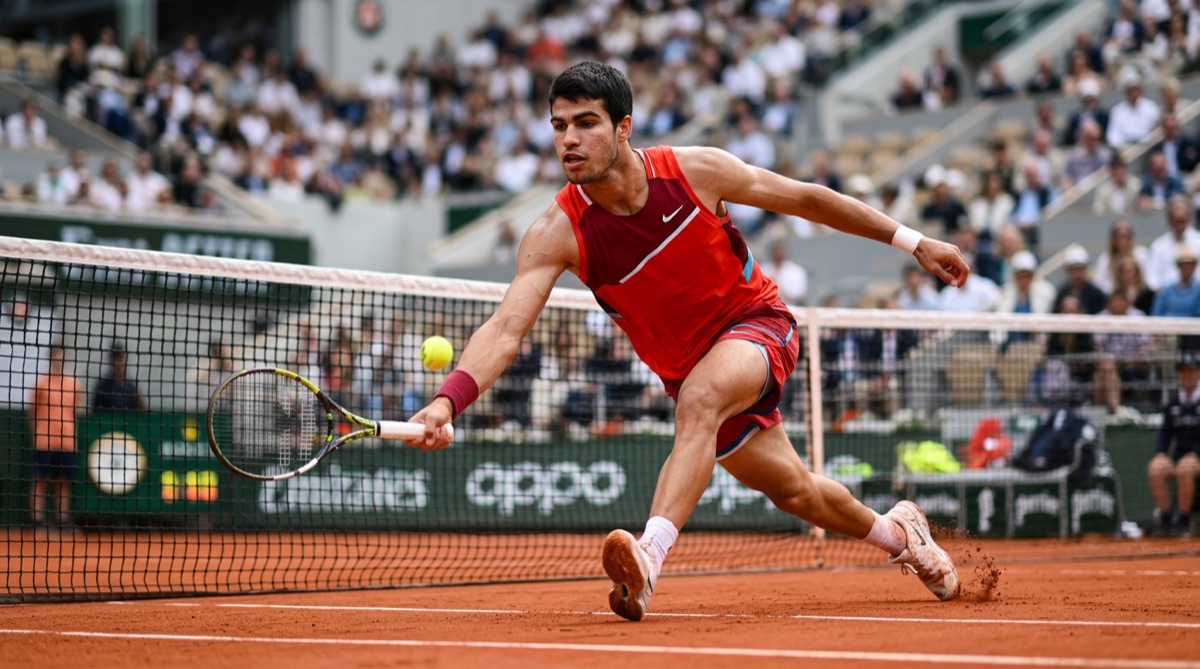
Forcing a difficult passing shot.
Sinner's raw power was undeniable, his early dominance absolute. But in that four-hour and nine-minute classic, Alcaraz demonstrated that tennis, in its highest form, is a contest of will and intellect as much as physical prowess. This victory was a reminder that the most formidable opponent can be undone not by brute force, but by a clever strategy and the unwavering courage to execute it when both mind and body are screaming in protest.